FRANCE AND WORLD JEWISH RESTITUTION ORGANIZATION (WJRO) HOST FOURTH INTERNATIONAL GATHERING OF HOLOCAUST ENVOYS IN PARIS
More Than 20 Representatives from a Dozen Countries Meet to Advance Holocaust-Era Restitution and Explore New Technologies
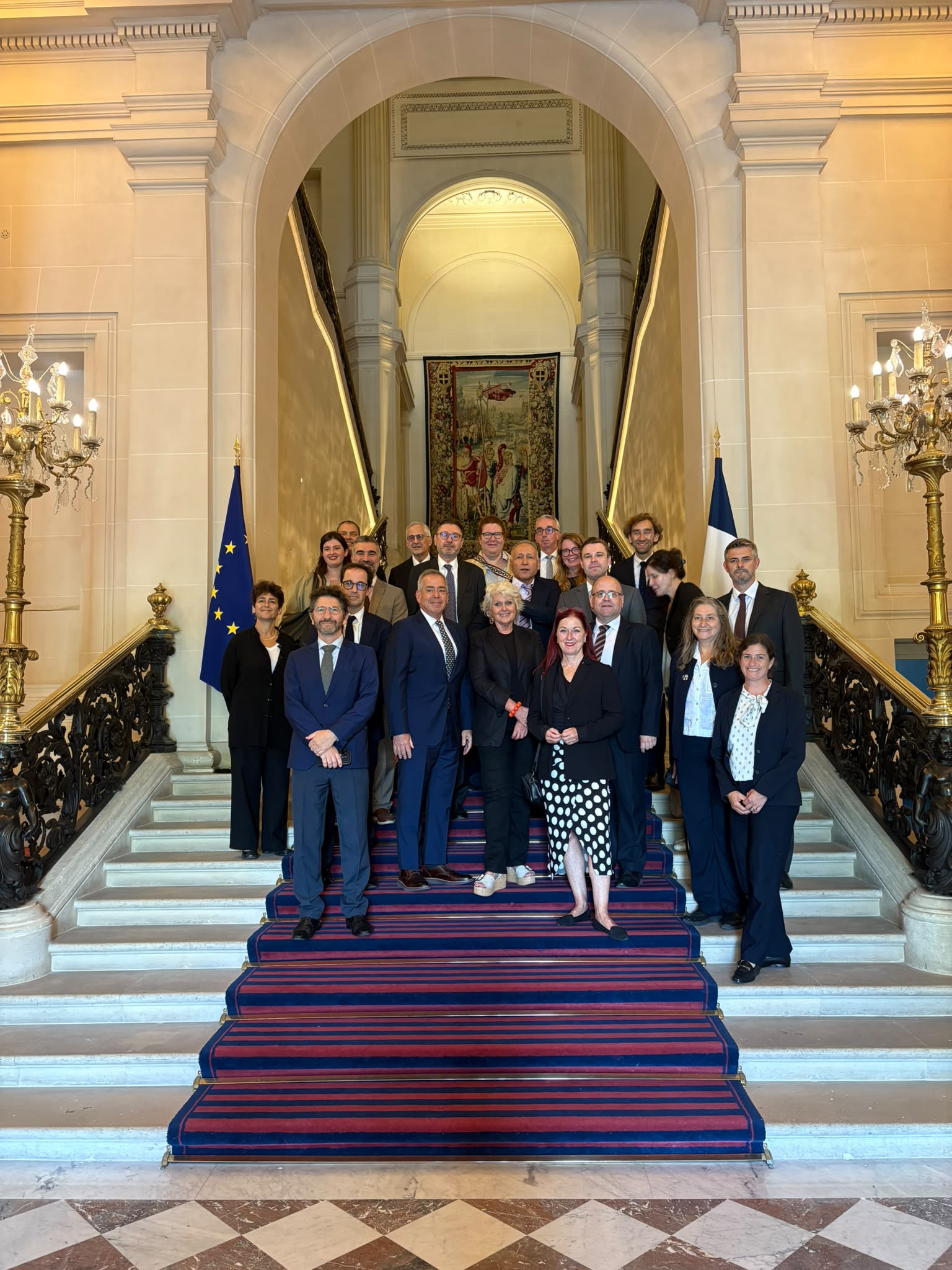
PARIS, FRANCE, September 10, 2026 — More than 20 senior government representatives, Holocaust envoys, and restitution experts from a dozen countries gathered in Paris on Tuesday for the fourth international gathering of the Special Envoys Network on Holocaust Issues, convened by the Government of France and the World Jewish Restitution Organization (WJRO).
More than 80 years after the end of the Holocaust, significant restitution issues remain unresolved. The Paris meeting brought together senior officials and experts to assess progress, share experiences, and identify practical steps governments can take to advance Holocaust-era property restitution.
A major focus of the meeting was the rapidly expanding role of artificial intelligence and other new technologies in Holocaust-era restitution work. Participants discussed how AI-assisted tools are already helping researchers process vast collections – from digitized photographs to handwritten records – at a scale and speed not previously possible, as well as how these tools can be applied directly to restitution research and cross-border cooperation.
Participants also discussed other unresolved Holocaust-era restitution issues and the need for governments to address persistent barriers to restitution and translate international commitments into meaningful action. Discussions included private, communal, and heirless Jewish property, as well as Nazi-looted art and cultural property. Participants also reviewed progress in implementing the Best Practices for the Washington Conference Principles on Nazi-Confiscated Art, which have now been endorsed by 35 countries.
“At a time when attempts to distort and undermine historical memory persist, and when antisemitism is tragically on the rise around the world, France firmly stands for the importance of preserving and transmitting the memory of the Holocaust. Cultural heritage plays an essential role in this effort, as it bears witness to the history of individuals and communities and remains a lasting means of understanding and redressing the injustices of the past,” said Ambassador Isabelle Rome, France’s Ambassador at-Large for Human Rights and International Holocaust Remembrance, Ministry for Europe and Foreign Affairs.
“More than 80 years after the Holocaust, there are still unresolved issues of restitution that require the attention and action of governments,” said Mark Weitzman, Chief Operating Officer, World Jewish Restitution Organization (WJRO). “This gathering gives us an important opportunity to learn from one another, identify where obstacles remain, and find practical ways to move restitution forward. In some countries, survivors and heirs still face barriers to pursuing claims simply because they are no longer citizens or residents of the country where the property was taken. That creates an unacceptable double standard, particularly when so many Jewish families were forced to flee their countries because of persecution and the Holocaust. Technology and greater access to archival information are giving us powerful new tools to uncover what happened to property that was taken. WJRO will continue to press governments to remove these barriers and ensure that restitution processes are fair and accessible to all.”
The Paris gathering builds on three previous meetings of the Special Envoys Network, beginning with the first international gathering in London in March 2023, followed by a second meeting in Washington, D.C., in November 2023, and a third in The Hague in April 2025. These meetings have strengthened international cooperation on Holocaust-era restitution and produced concrete initiatives, including the development of the 2024 Best Practices for the Washington Conference Principles.
As the number of Holocaust survivors continues to decline, participants reaffirmed the shared responsibility of governments to keep Holocaust-era restitution an international priority and underscored the urgency of turning that commitment into practical progress through continued cooperation, transparency, and the responsible use of new technologies.
For media inquiries please contact [email protected]